Most Texas state inspection failures come from small, fixable problems like a loose gas cap, a burned-out bulb, or a check engine light. Here's what trips up North Texas drivers and how to catch each issue before inspection day.
Nobody likes hearing "your vehicle didn't pass." The good news is that most Texas state inspection failures come from small problems you can spot and fix ahead of time. If you commute around Arlington, Duncanville, Mesquite, or anywhere in Dallas and Tarrant Counties, here is what trips drivers up most and how to avoid it.
Why DFW Drivers Face Extra Requirements
Dallas and Tarrant Counties are emissions counties. That means 1996-and-newer gasoline vehicles get an OBD-II emissions test in addition to the standard safety checks. The test reads your car's onboard computer, so a dashboard warning or an incomplete computer scan can mean a failed result even when the car seems to run fine.
The Most Common Texas State Inspection Failures
1. Check Engine Light and Unready Monitors
If your check engine light is on, the emissions portion will not pass. Sometimes the light is off but the test still fails because the OBD-II readiness monitors have not finished running. This often happens after a battery replacement or disconnect, or after someone clears codes. The monitors need a mix of city and highway driving to reset, which is usually a few days of normal DFW commuting. Not sure what your light means? Read our guide to the check engine light explained.
2. Loose or Faulty Gas Cap
A gas cap that does not seal can trigger an evaporative emissions code and a failed test. Make sure it clicks tight after every fill-up. If the seal is cracked or worn, replacing it is inexpensive and quick.
3. Burned-Out Bulbs
Headlights, brake lights, turn signals, and license plate lights all matter. A single dead bulb can fail the safety check. Have a family member step on the brake while you walk behind the car, then test your signals and high beams.
4. Worn Wiper Blades
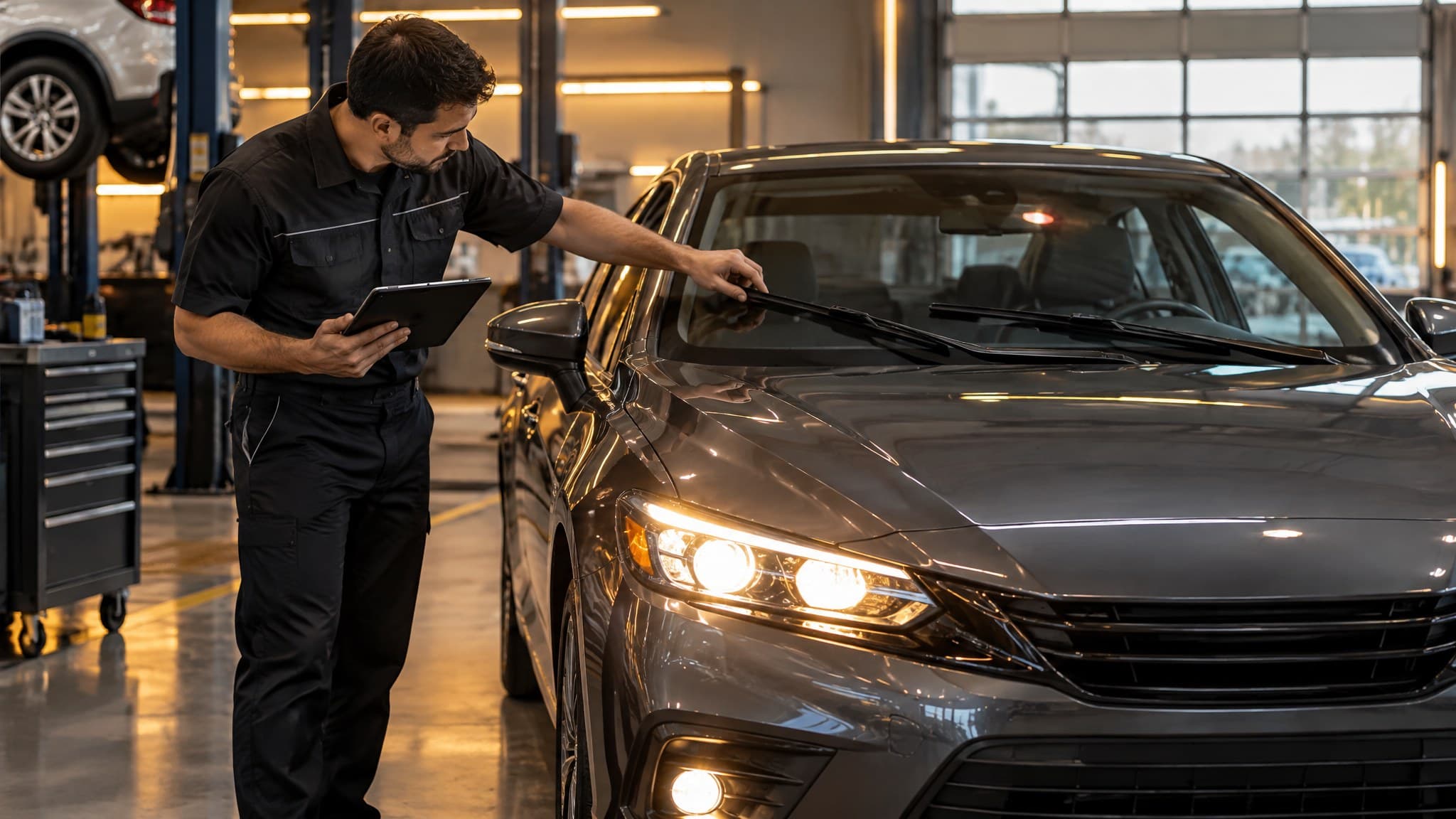
Texas sun and heat bake rubber quickly. Blades that streak, chatter, or split can fail, and they are a real safety issue during North Texas storms.
5. Low Tire Tread and Damaged Tires
Tires need adequate tread depth and no serious damage. Try the penny test: if you can see all of Lincoln's head when the penny is placed in the groove, your tread is getting low. Uneven wear can also point to alignment issues.
6. Brake Problems
Weak brakes, a low pedal, or a parking brake that does not hold can all cause a failure. Stop-and-go traffic on I-30, I-20, and US-67 is tough on pads and rotors, so listen for squealing or grinding and pay attention to pedal feel.
7. Windshield Cracks and Window Tint
Large cracks in the driver's line of sight, or window tint that is too dark, can be a problem. Rock chips along highways can spread quickly in temperature swings, so repair them early.
How to Prepare Before Inspection Day
- Check that your check engine light is off and has stayed off.
- Avoid battery disconnects or code clearing right before your inspection.
- Tighten your gas cap and inspect the seal.
- Test every exterior light, including brake lights and signals.
- Replace worn wiper blades and top off washer fluid.
- Check tire tread, condition, and pressure.
- Notice any brake noise, pulling, or soft pedal feel.
- Bring your proof of insurance.
Every oil change at Lube Masters includes a FREE 21-point whole-car inspection. It's a smart way to catch burned-out bulbs, worn wipers, low tires, and fluid issues before inspection day.
Get It Done Right at Lube Masters
Our team keeps your family's safety first and tells you honestly what your vehicle needs, nothing more. You can see what our technicians check in our 21-point inspection guide, or schedule a Texas state inspection at our Arlington, Duncanville, or Mesquite location. Walk-ins are always welcome, and if something fails, we can explain why and help you fix it the right way.
A little preparation goes a long way. Check the simple items now, keep an eye on your dashboard, and you'll be much more likely to pass on the first try and get back on the road.